Why Environmental Science Is Interdisciplinary: Climate and Applied Solutions
Environmental science isinherently Interdisciplinary Science because it necessitates the integration of knowledge from various disciplines like biology, chemistry, and physics, social sciences (such as economics and sociology), and engineering, to comprehensively understand the environmental issues, and then effectively address it.
Effective environmental management often requires collaboration among experts from different fields
This interdisciplinary character is visible where nature, technology and culture overlap in the source diagram.
Climate Change: An Interdisciplinary Example
Contents / Index
For example, to understand the causes and consequences of climate change, we need to consider :
- The physics of the atmosphere and oceans.
- The chemistry of greenhouse gases, their sources, and their impacts on the environment.
- The biology of ecosystems and their responses to climate change.
- The social and economic factors that drive greenhouse gas emissions, and the public’s perception of climate change.
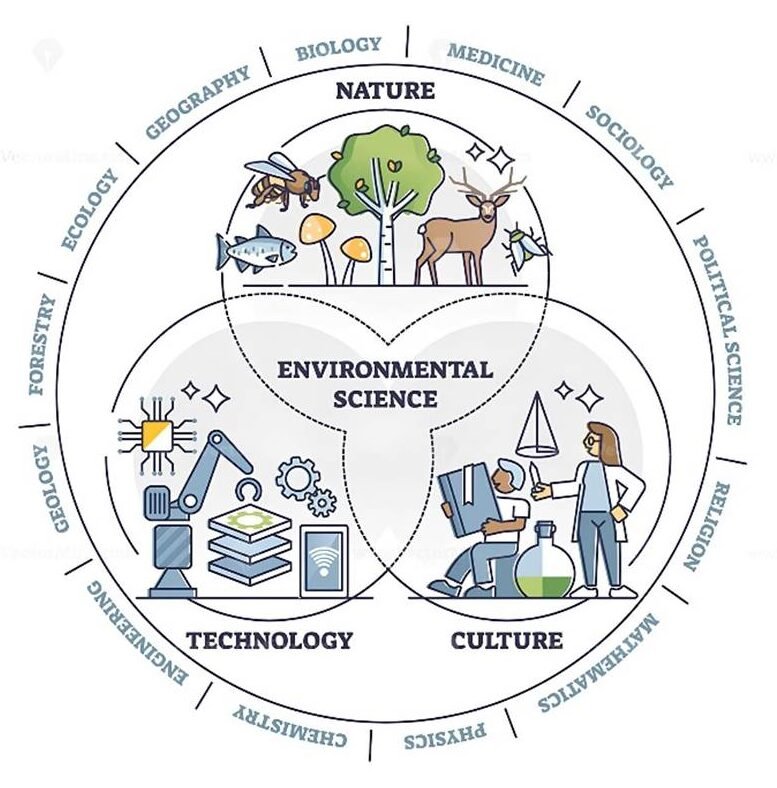
The diagram places Environmental Science at the nature–technology–culture interface. Its outer ring names ecology, geography, biology, medicine, sociology, political science, religion, mathematics, physics, chemistry, engineering, geology and forestry.
Taken together, the climate-change example links four kinds of understanding already identified in the source: physical processes in the atmosphere and oceans; chemical behaviour of greenhouse gases; biological responses of ecosystems; and social and economic factors associated with emissions and public perception. The example therefore shows why one discipline alone cannot comprehensively understand an environmental issue or effectively address it.
| Exam Corner / Previous Year Question |
|---|
| Q. Why is environmental science considered as an Interdisciplinary Science? What is the Scope of environmental science? [Arunachal PSC ACF (MAIN) 2018 | Envt. Science Optional | 4 M] Hint : Treat it as a two-part 4-mark question. First, explain interdisciplinarity through the integration of natural sciences, social sciences and engineering, supported by the climate-change example. For the Scope part, refer briefly to the three scope headings covered in Blog 1A rather than expanding them here. |
Innovative Solutions Developed Through Interdisciplinary Environmental Research
Bird & Bat Collision Mitigation : to reduce bird and bat fatalities caused by wind turbines by integrating insights from avian biology and renewable energy technology. By understanding bird flight mechanics, researchers are designing turbine blades that minimize collision risks, showcasing how interdisciplinary approaches can enhance renewable energy solutions while protecting wildlife.
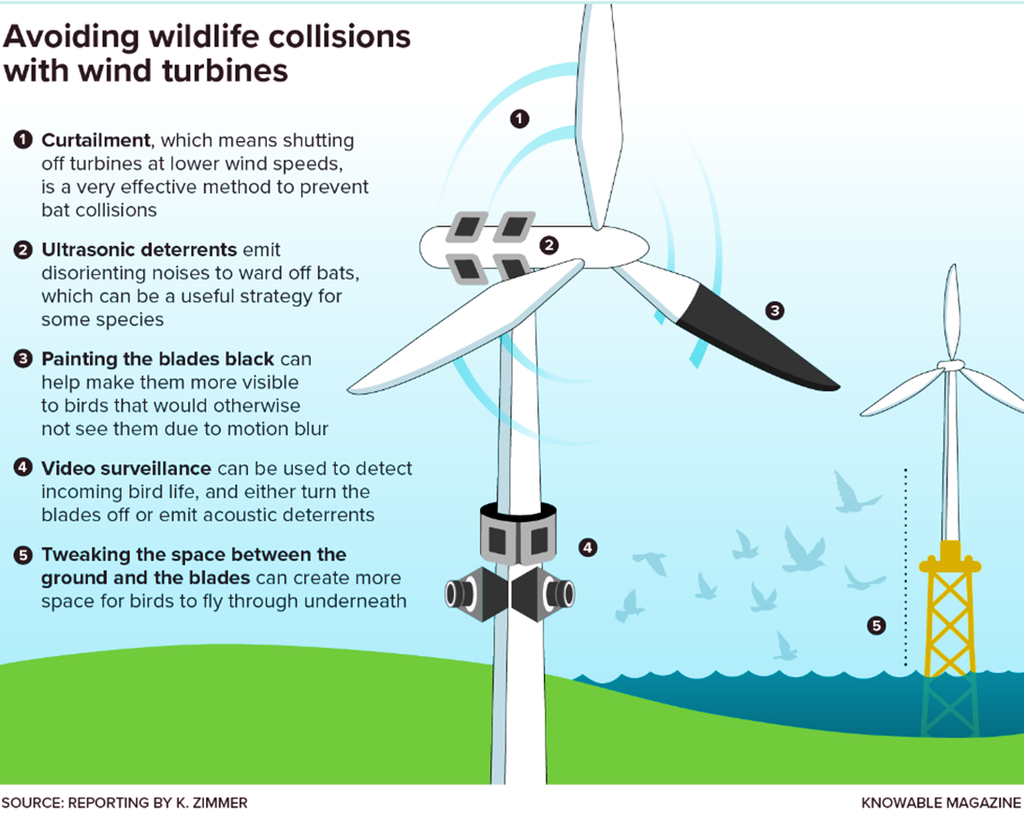
Bird/bat collision mitigation measures shown in the source infographic (p. 3).
- Turbine curtailment: temporarily stop turbines at lower wind speeds to reduce bat collision risks.
- Ultrasonic deterrents: to ward off some bat species.
- Painting turbine blades black: to increase bird visibility — a blade-visibility modification.
- Video surveillance: for approaching birds; blade shutdown or acoustic deterrents.
- Ground-to-blade clearance: increase the space between the ground and the blades to provide bird flight space.
Graphic attribution in the source: reporting by K. Zimmer; Knowable Magazine.
- Coral-Safe Sunscreen : his project combined knowledge from chemistry, marine biology, and environmental science to create a product that protects human skin without harming marine ecosystems.
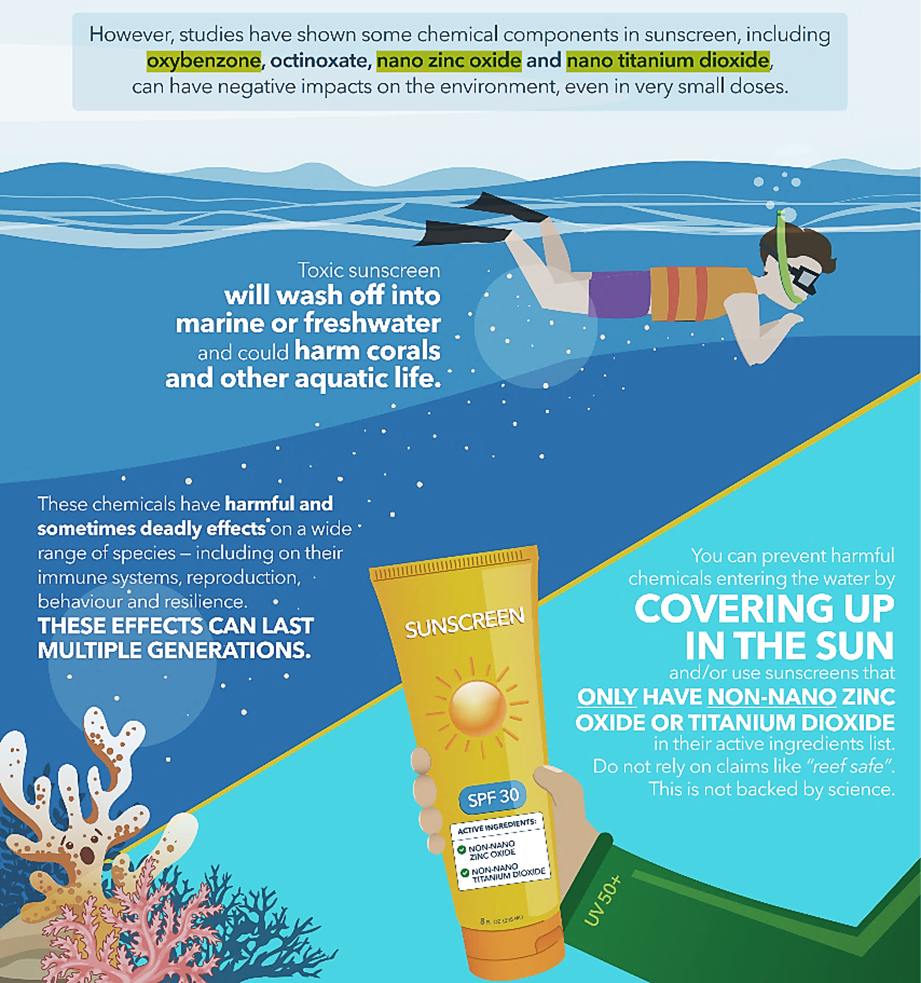
The source infographic names oxybenzone, octinoxate, nano zinc oxide and nano titanium dioxide. It claims toxicity to marine/freshwater organisms and impacts on immune systems, reproduction, behaviour and resilience across generations. It recommends covering up in the sun and/or formulations with non-nano zinc oxide or titanium dioxide, and criticises reliance on “reef safe” marketing claims.
- Green Infrastructure : integrates natural elements into urban planning to mitigate issues like air pollution and urban heat islands.
- AI-Driven Environmental Monitoring : by combining computer science with environmental studies.
Across these examples, the common pattern is integration. Bird and bat collision mitigation connects avian biology with renewable-energy technology; coral-safe sunscreen connects chemistry, marine biology and environmental science; green infrastructure connects natural elements with urban planning; and AI-driven environmental monitoring combines computer science with environmental studies. These are the applied forms of the interdisciplinary approach described in the chapter. The source therefore presents interdisciplinarity not only as a concept, but also as a practical approach to environmental problem-solving.
Quick Revision
- Environmental science integrates biology, chemistry, physics, sociology, economics and engineering.
- Climate-change study connects atmosphere/ocean physics, greenhouse-gas chemistry, ecosystem biology and social-economic drivers.
- Nature, technology and culture overlap within environmental science; effective management requires experts from different fields.
- Applied examples include bird/bat collision mitigation, coral-safe sunscreen, green infrastructure and AI-driven environmental monitoring.
Conclusion
Environmental science is interdisciplinary because environmental problems connect natural processes, technology and human society. The chapter illustrates this integration through climate-change analysis and practical examples in renewable energy, marine protection, urban planning and environmental monitoring.