
Lichens and plant roots interact with rocks through the processes described below. This topic is part of interactions between biotic and abiotic components.
Contents / Index
Lichen-mediated weathering: biogeochemical weathering
Crustose lichens (fungi + algae) secrete acids that break down rocks, releasing minerals. They help accelerate soil formation and nutrient cycling.
Oxalic acid reaction
CaCO3 + H2C2O4 → CaC2O4 + CO2 + H2O
H2C2O4: Oxalic acid.
Plant roots and rock breakdown
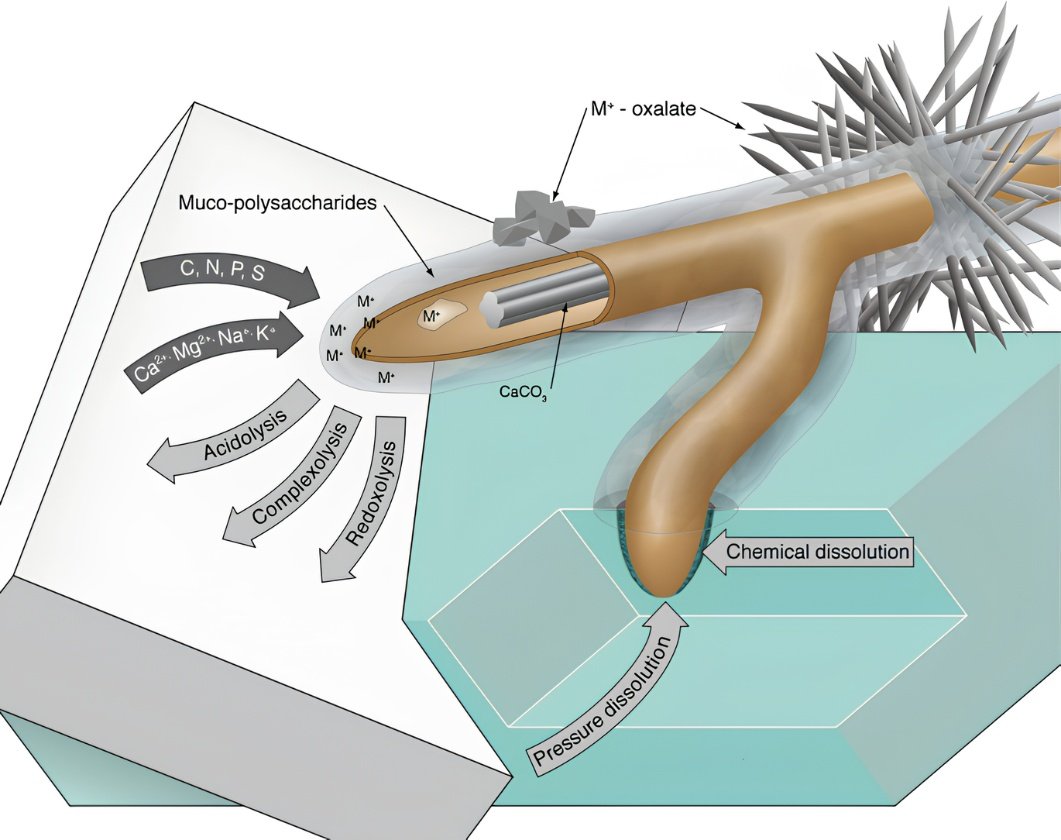
Acidolysis
Acidolysis is a process where the roots of plants release organic acids (H+) into the surrounding environment. These acids lower the pH of the soil, making it more acidic. As a result, this acidity helps to dissolve minerals in the rock, facilitating the absorption of nutrients by the plant.
Complexolysis
Complexolysis is a process where the roots of plants release organic compounds, such as ligands or chelating agents. These compounds bind to metal ions found in rocks, creating soluble complexes. This helps in breaking down the rocks and allows plants to access essential nutrients.
Redoxolysis
The root can alter the oxidation state of elements in the rock (like iron or manganese), making them more soluble.
Pressure dissolution
The physical pressure exerted by the growing root can also contribute to the breakdown of the rock, particularly at points of contact.
Quick revision
- Crustose lichens secrete acids that break down rocks and release minerals.
- Lichen activity helps accelerate soil formation and nutrient cycling.
- Acidolysis involves organic acids and lower soil pH.
- Complexolysis involves organic compounds binding to metal ions.
- Redoxolysis involves changes in oxidation state.
- Growing roots exert physical pressure at points of contact.