
The third layer of the Earth's atmosphere, situated above the Stratosphere and below the Thermosphere. It extends from approximately 50 km to 80 km in altitude, marking a region of significant transition in atmospheric properties.
Contents / Index
Temperature profile
The mesosphere is characterized by a negative temperature lapse rate, meaning that the temperature decreases with increasing altitude. This contrasts with the stratosphere, where temperatures rise due to ozone absorbing ultraviolet (UV) radiation.
In this layer, temperatures decrease from about 0°C at the stratopause to a minimum of around –80°C at the mesopause (In some cases even lower—reaching –100°C or beyond—depending on latitude and season).
Noctilucent clouds
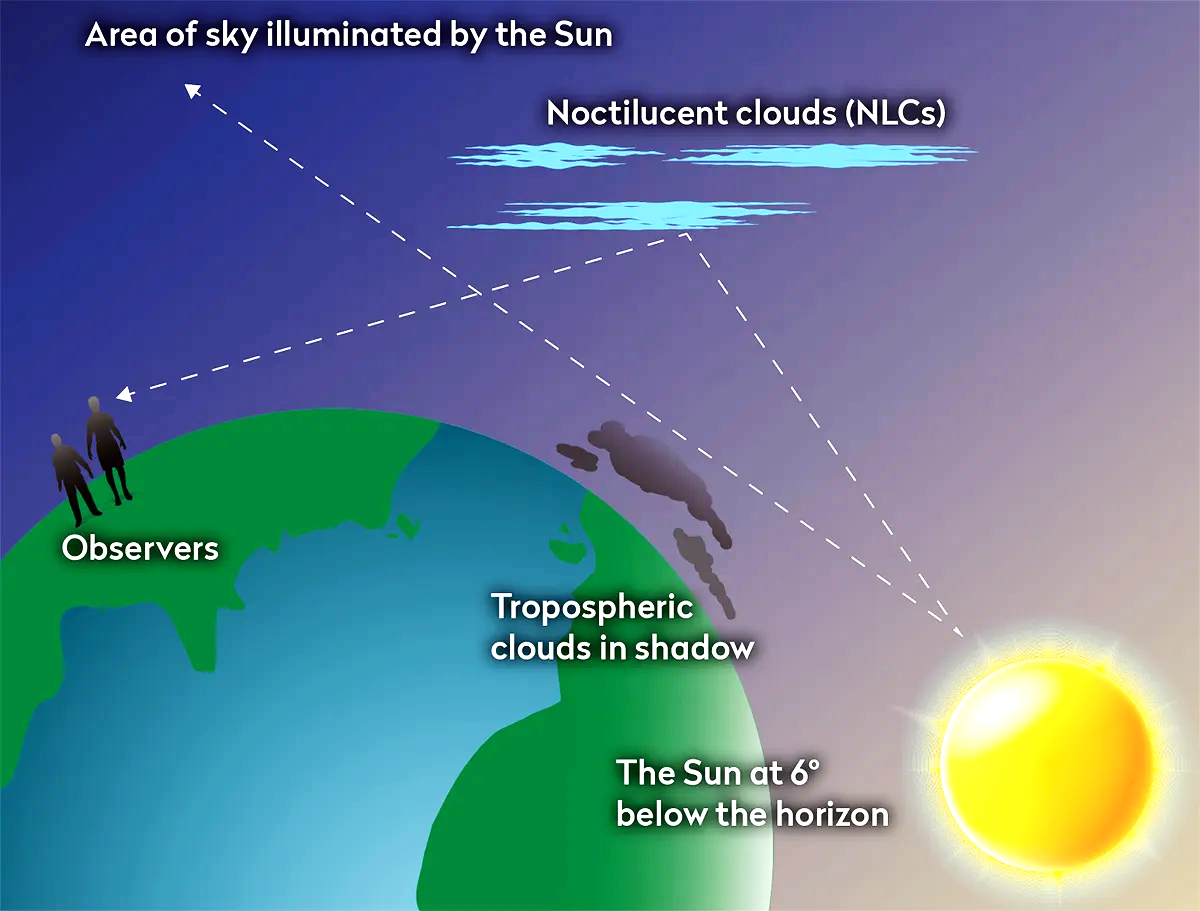
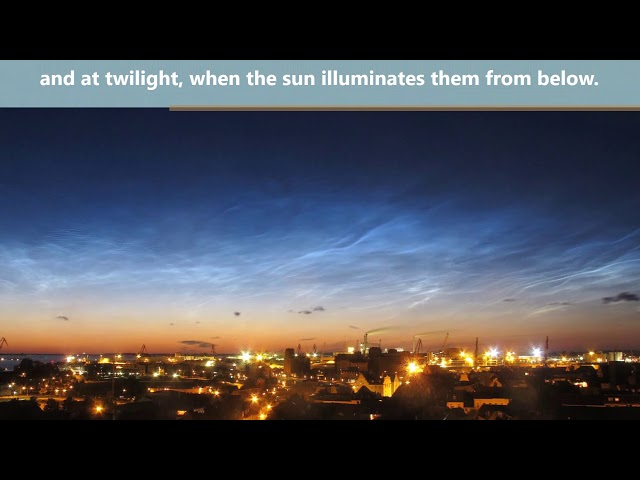
Noctilucent Clouds (polar mesospheric clouds) : Rare, blue or silvery high-altitude clouds visible before sunrise or after sunset during the summer months. They are composed of ice crystals (H₂O) that condense around dust particles, often originating from meteorites or volcanic eruptions. The moisture required for their formation may pass through gaps in the tropopause or result from chemical reactions involving methane and other atmospheric compounds.
The term "Gaps” in the tropopause refers to areas where the tropopause— the boundary between the troposphere and the stratosphere—allows some transfer/mixing of moisture or air between these layers.
Normally, the tropopause acts as a barrier, preventing significant mixing between the water-rich troposphere and the much drier stratosphere and mesosphere. However, under certain conditions, such as during strong convection or atmospheric disturbances, moisture from the troposphere can penetrate through localized "gaps" or breaks in this boundary.
Meteor ablation
Meteor Ablation : The Mesosphere is where most meteors, upon entering the Earth's atmosphere, experience intense frictional heating due to collisions with air molecules. This leads to their rapid heating, ionization, and ultimately, ablation (vaporization). The resulting luminous trails are what we observe as "shooting stars." The Mesosphere, therefore, acts as a protective shield, preventing most smaller meteoroids from reaching the Earth's surface.
Atmospheric gravity waves
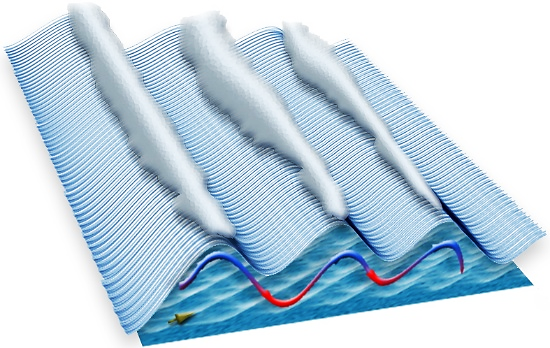
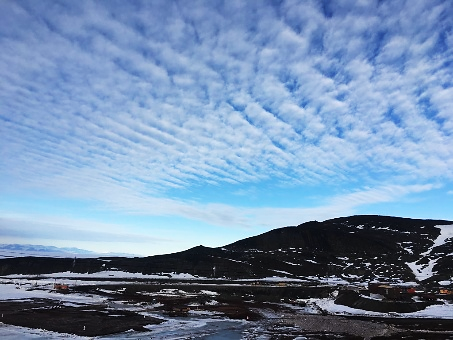
Atmospheric Gravity Waves : oscillations in the atmosphere that occur when air is forced upwards and then falls back down. They are similar to waves in water, but instead of water, they form in the air.
Mesopause
Mesopause : The boundary between the mesosphere and the thermosphere. It is the point in the atmosphere where the temperature reaches its minimum, often around -80°C to -100°C, depending on latitude and season.
Significance : It represents the coldest region in Earth's atmosphere.
Quick revision
- The mesosphere lies between the stratosphere and thermosphere.
- Temperature decreases toward the mesopause.
- The chapter describes noctilucent clouds, meteor ablation and atmospheric gravity waves.
- The mesopause is described as the coldest atmospheric region.
Related concepts from Chapter 1
- Abiotic components of environment
- Photosynthesis and biotic–abiotic interactions
- The interdisciplinary nature of environmental science
Related topics
- Structure of Atmosphere: Layers, Exosphere, Homosphere and Heterosphere
- Thermosphere and Ionosphere: Temperature and Radio Communication
- Sodium Layer: Artificial Guide Stars and Adaptive Optics
Chapter 2 index
- Composition of Atmosphere: Gases, Water Vapour and Dust
- Structure of Atmosphere: Layers, Exosphere, Homosphere and Heterosphere
- Troposphere, Stratosphere and Polar Vortex
- Ozone: Formation, Depletion and Effects on Plants
- Mesosphere: Noctilucent Clouds, Meteors and Gravity Waves
- Thermosphere and Ionosphere: Temperature and Radio Communication
- Aurora and Magnetosphere: Solar Wind and Earth’s Magnetic Field
- Sodium Layer: Artificial Guide Stars and Adaptive Optics